Annapurna Base Camp Trek
Make an Inquiry
-
Duration
-
15 days
-
Trip Starts
-
Anytime
-
Trip Ends
-
Not confirmed
-
Group Size
-
2
-
Activity Inclusions
-
None
-
Best Season
-
March - May
Overview
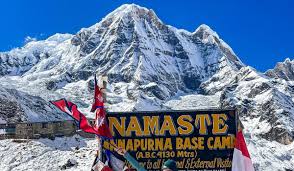
The Annapurna Base Camp trek is a popular choice, attracting approximately 70,000 trekkers every year with its awe-inspiring natural beauty and cultural richness. Located at an elevation of 4,130 meters (13,549 feet), the base camp of Mt. Annapurna I offers a mesmerizing destination. Along the way, you’ll traverse enchanting oak, rhododendron, and pine forests, immersing yourself in the vibrant cultural heritage of the Gurung and Magar villages.
This trek not only allows you to explore the foot of the world’s 10th tallest mountain, Mt. Annapurna I, towering at 8,091 meters (26,545 feet), but also offers a glimpse into the captivating culture that thrives amidst the picturesque Annapurna massif. Imagine waking up to a refreshing cool breeze, stepping out of your accommodation to witness the morning sun painting the Himalayan peaks in breathtaking hues of red and gold. It’s no wonder that trekkers are drawn back to this region time and time again, captivated by its magnificent trails.
The best seasons for embarking on the Annapurna Base Camp trek are spring (March to May) and autumn (September to December). During these seasons, the days are pleasantly warm, the nights are cool, and gentle breezes create a favorable trekking environment. For those willing to brave the cold, January and February are also viable options. Importantly, the Annapurna region has remained unaffected by recent earthquakes in Nepal, ensuring a safe and fulfilling experience.
Embark on this remarkable journey with confidence and discover the unparalleled beauty of the Annapurna region.
Cost Includes & Excludes :
Package Included :
- Airport Pick Up & Drop Services:
- Pick Up : Welcomes you with garland of flower in Kathmandu International Airport and transfer to your hotel by our representative
- Domestic Drop/Pick Up : Kathmandu Domestic Airport drop & pick up as flight indicated in itinerary
- Drop to Airport : By means of appropriate private vehicle, with our airport representative, last minute transfer to airport after trip for onward journey
- Trip Briefing & Information:
- We provide you Eco-friendly Trekking file consisting broad trip information and introduce with your trekking guide at the time of remaining payment of the trip price after your arrival
- Sight Seeing:
- Sightseeing Places : Pashupatinath, Boudhanath, Swyambhunath (Monkey Temple) and Kathmandu Durbar Square by private vehicle
- Guide : Experienced English speaking city tour guide
- Entrance Fees : All entrance of sites & monuments fees
- Accommodations & Meals:
- (All twin sharing basis)
- (Single room also served with extra charge) :
- Kathmandu : Four Star deluxe twin sharing accommodation in Kathmandu with breakfast as per itinerary
- Trekking : Comfortable, neat and clean accommodation on teahouse/Mt. lodge during trekking
- Breakfast, Lunch & Dinner : Full board of meals are included while on trek and only breakfast are included in Kathmandu
- Seasonal fruits during the trek are provided
- Hot Drinks : High altitude friendly different soups hot lemon or tea is served as cup basis in food time
- Welcome & Farewell dinner : We will take you to one finest restaurants of Nepal (Alcoholic beverages are excluded )
- Flight / Transportation:
- Kathmandu to Pokhara and return by Tourist bus
- Pokhara to Trek Starting point and trek ending point to Pokhara by private transportation drive
- Trekking Permit :
- All necessary Trekking permit & TIMS card
- National Park Fare:
- All necessary National Park entrance fees
- First Aid:
- Medical kit box during the trip
- Trekking Crews :
- Guide : Government Registered, well trained English Speaking mountain experience, First Aid and eco trained local guide escorts during your trekking
- Assistant Guides : We provide assistant guide walking with group to support where necessary as per the group size
- Porter Equipment :
- Trekking boots and Jacket in trekking
- Insurance:
- Guide / Porters : Company provide insurance for our guide and porters as per state law
- Trekking Equipment :
- Nepal Vision Duffel Bag and a t-shirt
- Down jacket and four seasonal sleeping bags (which needs to be returned after the trek)
- Altitude Chamber: Portable Altitude Chamber on request
- Certificate:
- Nepal Vision adventure certificate
- Others:
- All applicable government and local taxes as per the itinerary
Package Excludes :
- Visa:
- Nepal : You can obtain a visa easily upon your arrival at Tribhuwan International Airport in Kathmandu.
- Multiple entry 15 days US$ 25 or equivalent convertible currency
- Multiple entry 30 days US$ 40 or equivalent convertible currency
- Multiple entry 90 days US$ 100 or equivalent convertible currency
- Note: Please bring 2 copies of passport-size photos to issue visa.
- Airfare:
- International Airfares
- Meals:
- Lunch & Dinner in KTM : Lunch & dinner in Kathmandu is included
- Drinks:
- All cold drinks and any beverages are not included on trip price
- Drinking Water : Drinking water is not included in the trip price
- Insurance:
- You have to make your travel & rescue insurance by yourself before leave for travel
- Optional Excursion:
- Provide such service with extra charge on your request
- Optional Excursions : Our optional excursions are culture trips, ethno trips, and festival trips, monastery meditation with Lama & monks, nature medicine trips, bird watching, sports, farming trips and other incentive trips as per the client’s interest
- Trekking Equipment:
- Duffel Bags will be provided free but the day pack should be brought as per your wish.
- You have to arrange your personal trekking equipment such as trekking poles, water bottle etc… by yourself (see our equipment list)
- Tipping:
- Tips for driver, guides and porters are not included in the cost
- Others:
- Personal expenses e.g. phone calls, laundry, bar bills & extra porters
- Hot Shower in during the trekking period is not included
- Cost arising out of landslides, road blockade, and rescue of any form, cancellation of flight or reasons beyond our control
- Any others expenses which are not mentioned on Price Includes section
Useful information before joining this trip
Our Effort
Our trek is managed by a team of professionally trained leader/guide who are responsible for all aspects of operation of the trek. We will make every effort to keep the treks as the proposed itinerary, however as this is adventure travel in a remote Himalayan region, we cannot guarantee it! Weather conditions and health conditions of the member of the trekking team can be a factor compelling us to change the itinerary. The leader will try to ensure that the trip runs accordingly, but please be prepared to be flexible when if it is necessary.
Trekking Group
Nepal has abundance of offers to establish it as a round the year travel destination. Based on this fact, many international tourists are indeed incorporating Nepal in their wishful travel itinerary. For this Everest Base Camp trek, in our trekking group there will be one trek leader and one Sherpa porter for each group of two trekkers but we provide one assistant guide as per group size. Generally in our group the minimum number of tourist will be two and the maximum group size is ten. For single traveler, we organize the trip with single supplement. We saying 20 people are our maximum pax for the trek doesn’t mean we are not operating more than 21 persons, we do it on request. However it is good to keep the limit group size which means we can provide a best services and personal take care to our valuable clients during their trip with us.
Physical and Mental Requirements
Trekkers who are making their plan to travel in the Himalaya, most require three basic components of preparation – aerobic, strength, and mental. Aerobic conditioning is important primarily because you will trekking in thin air, up to 50% less than at sea level. With good aerobic conditioning you will be able to minimizing the potential effects of Altitude Mountain Sickness (AMS). Hiking for at least two hours per day with some weight on your back is the best way to prepare yourself for trekking. Running, cycling (outdoor or stationary), Nordic track, hill climbing, or any exercise that gets your heart rate into the aerobic range for sustained periods of time.
Every day you will walk in the Himalaya around 4 to 7 hrs and reaches at highest place to 5550m/18204 feet. So, health is a most essential part for your adventure travel. Sunny treks most require your medical fitness certificate prior to your booking. Before the trip booking with us we suggest to consult with your Medical Doctor and in his/her references go for your trip booking process.
Trekking in the Himalayas is a relatively safe activity and mishaps or problems are usually minor. However, unpleasant things can occur on a long trek. You might have a bout of mild illness, not sleep as well as usual, find the trek pace too fast or slow – any number of things might be annoying or stressful during some part of your trek. Before you leave for Nepal, or for any foreign destination for that matter, think about the journey as more than just a quest to reach a destination. Try to imagine your trip as an opportunity to experience whatever happens as an essential part of the journey. It doesn’t matter so much whether you actually reach Everest Base Camp. You should be prepared to find joy and fulfillment in all the moments of your trip, including the less pleasant ones that you hadn’t expected. Preparing to keep a very positive frame of mind throughout your trip, along with good physical conditioning, will insure that you are ready to experience all the wonders of Nepal.
Our Trek Leaders and Staffs
Your Trek Leader’s role is to ensure all aspects of the trip run smoothly. He will share their local knowledge, advice on how to fill your free time and co-ordinate the day to day running of the tour – although occasionally he may need your understanding if things do not go according to plan. If you have any problems on the tour, please let your Trek Leader know so that steps can be taken to put it right.
We are a well stabilized adventure company and we employed professional trek leader (who are based on English speaking and few are multi-lingual’s) and required crew member (they have basic knowledge of communication). We also provide the training to our staff increasing their work efficiency. And our guides are intimately familiar with all local castes and customs along the trails and will share with you many cultural insights that are not covered in any guide book. You will have good chance to learn Nepali phrases, cultural things and more on your Trekking. Sunny trained its guide/trekking staff on following course.
- Trekking Guide Training & licensed- Government of Nepal, Ministry of Tourism & Civil Aviation department of Hotel Management & Tourism Training Centre
- Eco Trekking Workshop & Adventure Meet TAAN (Trekking Agents Association of Nepal)
- Intensive Wilderness First Aid KEEP (Kathmandu Environmental Educational Project)
- English Language KEEP
- Conservation & Biodiversity TAAN
- Rock & Ice Climbing & Mountaineering (Climbing leaders) Nepal Mountaineering Association
Our Experience
Suny treks has been operating in the Himalaya for over 15 years and specializes in responsible travel. We offer small group adventure expeditions to Nepal, Bhutan, Tibet and the Indian Himalaya. Our unrivalled itineraries reflect our long experience in the region. All our treks are accompanied by a highly experienced local leader ensuring safe acclimatization at every stage. You can hike, mountaineer and climb your way through the homeland of the adventure holiday.
Sunny treks is one of the world’s leading adventure travel company offering hundred of itineraries on this continent for small group active adventures and expeditions, walking tours and cultural journeys. The company has been operating trekking and adventure travel holidays and vacations since 1992. Each itinerary has several scheduled departure dates throughout the whole year.
Our all-inclusive, no hidden extras pricing policy combined with longer, creative itineraries and the use of quality ground services attracts people who have high expectations of their travel experiences.
Acclimatization
We are experts at operating at high-altitude. Every trip we run has a realistic acclimatization programme. Our treks are designed to allow gradual height gain, spread over a number of days. There is no way of predicting who will suffer from altitude but, for the vast majority of people, a slow ascent to height will produce minimal effects. We can provide ‘Gamow Bag’ as a precautionary measure as per your request on hiring basis. Acclimatizing takes time and there are no safe shortcuts. All trips to altitudes in excess of 3,000 meters carry medicines essential to the treatment of altitude illness, and our leaders are trained to administer them and to know the symptoms.
Diamox (Acetazolamide)
Diamox (Acetazolamide) allows you to breathe faster so that you metabolize more oxygen, thereby minimizing the symptoms caused by poor oxygenation. This is especially helpful at night when respiratory drive is decreased. Since it takes a while for Diamox to have an effect, it is advisable to start taking it 24 hours before you go to altitude and continue for at least five days at higher altitude. The recommendation of the Himalayan Rescue Association Medical Clinic is 125 mg. twice a day (morning and night). (The standard dose was 250 mg., but their research showed no difference for most people with the lower dose, although some individuals may need 250 mg.) Possible side effects include tingling of the lips and finger tips, blurring of vision, and alteration of taste. These side effects may be reduced with the 125 mg. dose. Side effects subside when the drug is stopped. Contact your physician for a prescription. Since Diamox is a sulfonamide drug, people who are allergic to sulfa drugs should not take Diamox. Diamox has also been known to cause severe allergic reactions to people with no previous history of Diamox or sulfa allergies. Frank Hubbell of SOLO recommends a trial course of the drug before going to a remote location where a severe allergic reaction could prove difficult to treat.
Travel Insurance
To be adequately protected in terms of insurance, you will need specialist travel insurance for participation in the hazardous activities. A travel insurance policy that covers helicopter evacuation, trip cancellation, injury, death, lost baggage, theft, liability, medical treatment and expenses is strongly recommended. Make sure the insurance covers all the activities that you will be undertaking during your stay in Nepal such as trekking and climbing.
If you are injured and unable to travel, you can ask for a rescue helicopter from a remote area only if you have definite proof you can pay for it. Sunny Treks have an agreement in Kathmandu that guarantees payment for helicopter evacuations. They pay a cash deposit to the helicopter operator and collect the money from you once you have been rescued. Be sure your policy specifically covers mountaineering or alpinism or you may have a difficult time settling a claim.
Climate and Weather
The climate of Nepal is as varied as its geography. The low-lying Terai has a sub-tropical monsoonal climate. The Himalayan foothills, where most of our treks take place, are best in the cool dry season from September to May. The traditional trekking season in Nepal is late September to May, with October and November generally recognized as having the best weather. Spring is also a popular time of year with warmer weather and the advantage of seeing spring flowers and rhododendrons in bloom. The visibility is good, days are pleasantly warm, although nights can be cold, and snow is possible above 3,000 meters.
Everest Base Camp trek is likely to have a wide range of temperatures depending on the altitude and the time of day. In the mountains up to 3,500m the nights will be cool, normally around 5 degree C, and during the day temperatures sometimes rise to 25 degree C. At higher altitudes temperatures range from about 20 degree C to -15 degree C.
Passport and Visa Requirements
All foreigners require a visa for entry into Nepal (except Indian nationals). It is your responsibility to obtain the entry visa. Visas can be obtained from the Nepalese embassy prior to travel or on arrival at Tribhuvan International Airport in Kathmandu and various international border crossings between Nepal and its neighbors. Make the visa process easier a passport-sized photograph for immigration and having the correct USD cash is required – please bring this in your hand luggage. In addition, trip in Nepal requires photos for the various permits. Please bring a total of 3 photographs.
- Multiple entry 15 days US$ 25 or equivalent convertible currency.
- Multiple entry 30 days US$ 40 or equivalent convertible currency.
- Multiple entry 90 days US$ 100 or equivalent convertible currency.
You will require visa fee in cash (this is payable in any major currency but NOT travellers cheques) and passport photos to purchase a Nepal visa on arrival at Kathmandu airport or at the Nepal entry point.
If you plan to obtain your visa in your country, you can download the application form from the website at: www.nepalimmigration.gov.np
Please note: Visa regulations and costs do change frequently so it is advisable to check the current rules with your nearest Nepalese embassy or consulate.
Permits and fees
In Nepal, you most require permits and fees to enter a certain areas such as World heritage sites, National Park, restricted areas along climbing as well. All the trip prices are including the cost of relevant permits and entrance fees. Incase of any such conditions we will inform you if required any additional permit fees before you make a booking with us.
Health and Fitness for trekker
We strongly recommend our clients for consulting the doctor before planning your holidays. You should obtain professional advice from a travel clinic or your local GP about which vaccinations to have before you arrive in Nepal. Your doctor will advise current inoculation requirements. If a doctor has recommended against travel or indicated travel may be inconvenient then inform us of the details. On all trekking and exploratory trips technical experience is not required, hiking/camping experience is an advantage, but by far the most important thing is a positive attitude and a generous amount of determination. We strictly maintain hygiene foods on the trek. We carry extensive medical kits and, if the need should ever arise, we are able to evacuate seriously ill group members by helicopter. We run regular first aid courses for our all trekking guides and Sherpa helpers.
Meals and Accommodation
In Kathmandu we use deluxe hotel to ensure a comfortable stay and relaxed environment before and after your adventure. All breakfasts and all meals are included at the hotel in Kathmandu. Rooms are generally twin share – depending on group size and room availability, triple share may be offered to your request. A single supplement room is available at an additional cost. And on request single supplement will be charge inr 14000.
While on the trek, we provide good quality food in sufficient quantities from Tea Houses/Mt. lodges. We provide all meals on full board (Breakfast, Lunch, Dinner and tea & coffee) from the teahouse menu during the trekking period. Whilst trekking on the Everest, the accommodation is in guesthouses which are basic structures, generally with shared facilities but very comfortable. In some guesthouses, showers are available; where there are no showers; there are private facilities in which you can sponge bath.
Ethical and Environmental considerations
The Sunny Treks is committed to adopting a responsible attitude to the areas we visit. We are guests of the communities visited and with some thought and care we can ensure that everyone benefits from the experience. We have developed a Responsible Tourism policy which aims to ensure that The Sunny treks and its clients act in a way that is socially, environmentally and culturally sound.
- On this trip: Our policy of staying in locally owned accommodation, having local group members and using transport owned and operated by local people wherever possible is continued in Nepal. Our small groups (maximum of 10 people) have a minimal impact on the Himalayas’ fragile environment as we explore predominantly on foot. All trek guides are responsible for ensuring that the guests understand the nature of the environment that they are in and minimize the impact that they may have. Our porters in Nepal are equipped with suitable clothing and footwear for the type of trek they are about to work on, and this is recorded at the start of the trek.
- Our Travel Code: Clients who travel with us will automatically receive a copy of our Travel leaflet. This contains details and advice on how you can make a positive difference when you travel. If you would like a copy in advance of travel please contact us.
- Charity: We work in partnership with rural village communities. We work with some of the world’s poorest communities where three out of four children die before the age of five. We also support local people to develop a balance between their needs and the wildlife with which they share the natural habitat and ecosystems.
How to Book
To join a Trekking adventure, please advise which adventure you’d like to book.
We’ll send you the relevant booking form (along with our terms & conditions) which you’ll need to complete and return to us.
A completed booking form and non-refundable deposit of 20% (per person) is required to confirm a place on your selected adventure.
Please don’t hesitate to in relation to any questions you may have regarding our booking process.
Clothing and Equipment
Correct Clothing & Equipments are essential for a safe and enjoyable trek. Experienced trekkers will often take only a selection of these items based on what has worked in the past. Please find the equipment list below for your personal use during your travel with us.
FOOTWEAR
» RUNNING SHOES » : 1 pair for casual Comfortable support shoes wear on lighter walking days.
» LIGHT HIKING BOOTS » : 1 pair of sturdy hiking boots in which you should wear a light synthetic sock under a warm heavy sock comfortably, either wool or synthetic. Sole should be flexible but still provide enough support for your feet. Boots should be very water repellent.
» HIKING GAITERS (Optional) » : 1 pair keeps rocks out of shoes and boots dry in case of precipitation. Optional if trekking pants are worn.
» WOOL SOCKS » : 3 pair heavyweight wool socks to be worn over the liner socks. When layering socks, check fit over feet and inside boots. Remember to keep one fresh, dry pair of socks available at all times. Socks with padded shins are especially nice with boots.
» LINER SOCKS » : 3 pair of smooth thin wool, nylon or Capilene to be worn next to the skin. This reduces the incidence of blisters and hot-spots and makes the outer sock last longer before needing to be changed. They should fit well with your heavyweight socks.
CLOTHING
» LIGHTWEIGHT LONG UNDERWEAR » : 2 pair, tops & bottoms, Capilene, other synthetic or wool. No Cotton. Lightweight is preferable as it is more versatile (worn single in warmer conditions and double layer for colder). Zip-T-neck tops allow more ventilation options. One set of white for intense sunny days and one pair of dark for faster drying gives the most versatility.
» LIGHT TREKKING PANTS » : Lightweight nylon pants designed to be used while trekking. They are extremely air permeable, dry quickly and provide sun protection. Zip-off lower leg sections are convenient for switching to shorts.
» T-SHIRTS » : Lightweight crew style t-shirt that wicks away moisture. Shirt can be made of any synthetic material.
» BANDANA » : Bring bandanas for face masks and other tasks.
» SYNTHETIC/SOFT SHELL JACKET » : A full-zip version is easier to put on and has better ventilation than a pullover.
» INSULTED DOWN-JACKET » : Medium to heavy weight with hood.
» HARD SHELL JACKET WITH HOOD » : We recommend a waterproof breathable shell material with full front zipper, underarm zips, and no insulation. This outer layer protects against wind and rain.
» HARD SHALL PANTS » : Waterproof, breathable. Any side zipper length is fine as long as you can get them over your boots.
HANDWEAR
» FLEECE/SOFT SHELL GLOVES » : 1 pair. A heavier fleece will do a better job of keeping hands warmer when wet than lighter polypropylene or Capilene.
» SHELL GLOVES WITH INSULATION » : 1 pair. Insulation does not need to be removable. A good quality ski glove is sufficient.
HEADWEAR
» HEADLAMP & SPARE BATTRIES » : A good quality climber’s headlamp. For use at night, bring extra batteries!
» SUN HAT » : The sun can be intense at high altitude. A hat with a good visor provides protection for the nose and eyes. Baseball hats work well. A Buff is recommended to reduce the amount of dust inhaled while trekking and reduces the chance of infection.
» NECK GAITER OR BUFF » : Buff is preferred for covering the face and preventing sickness.
» GLACIER GLASSES » : 100% UV, IR, high quality optical lenses designed for mountain use, must have side covers, leashes, and a nose guard is particularly helpful. No more than 8% light transmission. If you wear contact lenses we recommend packing a spare pair of glasses—it is a good idea to have these with “photo-gray” or equivalent light-sensitive material so they can double as emergency sunglasses. If you wear glasses we recommend prescription glacier glasses (gray or amber). Talk to your eye care professional to find out where prescription glacier glasses are available. Regular sunglasses are not dark enough and do not provide any side protection from the sun.
PERSONAL EQUIPMENT
» SLEEPING BAG » : High quality with hood to at least – 10 Degree, Down is lighter and less bulky, but more expensive than synthetics. (Company provide you sleeping bag for this trek)
» BACKPACK » : A day pack big enough to carry water bottles, camera, lunch and extra clothing. 3,000cu.in. max
» ADJUSTABLE 3 SECTION TREKKING POLES » : Optional
» WATER TREATMENT TABLETS » : Iodine or Chloride Dioxide tablets. A small bottle or multi pack is sufficient. Taste neutralizer tablets remove iodine taste. Chloride Dioxide formulas will not discolor water
» WATER BOTTLES » : 2 Wide mouth bottles with minimum 1 Litre capacity per bottle. No water bag or bladder systems, they freeze or are hard to fill.
» PEE BOTTLE (Optional) » : but very useful.
» PEE FUNNEL FOR WOMEN (Optional) » : Lightweight urinary director. (For minimal undressing for discreet use)
» SUNSCREEN » : SPF 30 or better, 2 small tubes. Make sure that the sun screen is not older than 6 months. Sunscreen older than six months loses half of its SPF rating.
» HAND/FOOT WARMERS (Optional) » : Recommended if you easily get cold hands and feet 1-3 pairs.
» LIP SCREEN » : SPF 30 or better, at least 2 sticks. Not older than 6 months.
» MP3 PLAYER (Optional) » : Flash memory only players since hard drive players do not work at high altitude (above 13,000ft). Chargers can be used at several lodges along the way.
TRAVELING
» LARGE DUFFLE BAG WITH TRAVEL LOCKS » : 1 for transporting and storing gear. These bags are needed to transport your clothing.
» PLASTIC BAGS (5) » : For lining stuff sacks & pack to keep gear dry. Trash compactor bags work best.
» TRAVEL CLOTHES » : You will need street/casual clothing for air travel days and time spent in Kathmandu.
» TOILETRY BAG » : Include toilet paper, soap, towel, and toothbrush, Wet wipes 1-2 per day and hand sanitizer: Hand moisturizer.
FIRST AID
» PERSONAL FIRST AID KIT (small and simple) » : Aspirin, Moleskin, Adhesive tape, Band-Aids.
» DRUGS/MEDICATIONS/PRESCRIPTIONS » : Climbers should bring Mupirocin (Bactroban) cream, excellent topical antibiotic for scrapes and cuts. Cirprofloxin (Cipro) 500mg tablets for traveler’s diarrhea and for urinary tract infections. Loperamide (Lomotil) or Immodium for diarrhea. Acetazolamide (Diamox) 125 or 250mg tablets for alltitude sickness. Ibuprofen (Advil, Motrin) 200mg tablets for altitude headaches, sprains, aches, etc. Excedrin for headaches. Acetaminophen (Tylenol) 325mg tablets for stomach sensitivity
Road Map
Itinerary













Essential Info
Equipment & Gear-

Moisture-wicking base layers
-

Insulating mid-layers (fleece or down jacket)
-
Waterproof and windproof outer shell jacket
-

Waterproof and breathable trekking pants
-
Warm hat, gloves, and neck gaiter or scarf
-

Sun hat or cap for sun protection
-

Hiking socks (wool or synthetic)